Fitulator
Army Waist to Height Ratio Calculator
The Army now screens every Soldier with one number: waist divided by height. Enter yours to see if you are under the 0.55 limit. To estimate your overall composition, use our body fat calculator.
More Calculators
Run the Navy's current two-step assessment.
Find out how much of your weight is not fat.
Compare your lean mass for your height.
Set a goal weight, calorie and protein target.
Check your waist against your height.
See how your fat is distributed.
See the normal ranges for men and women by age.
What Is the Army Waist-to-Height Standard?
On July 7, 2026, the Army announced that it had replaced its height and weight tables, the circumference-based tape test, and its supplemental body fat assessments with a single measure: the waist-to-height ratio, or WHtR. The policy is Army Directive 2026-13.
The standard is a ratio of less than 0.55. A ratio of exactly 0.55 does not meet it. Every Soldier is screened at least twice per calendar year, and the same standard applies to USMA and Senior ROTC cadets.
Under Army Directive 2026-13, the standard is a waist-to-height ratio below 0.55 — your waist at the navel divided by your height in inches. A ratio of exactly 0.55 does not meet it.— U.S. Army Body Composition Program
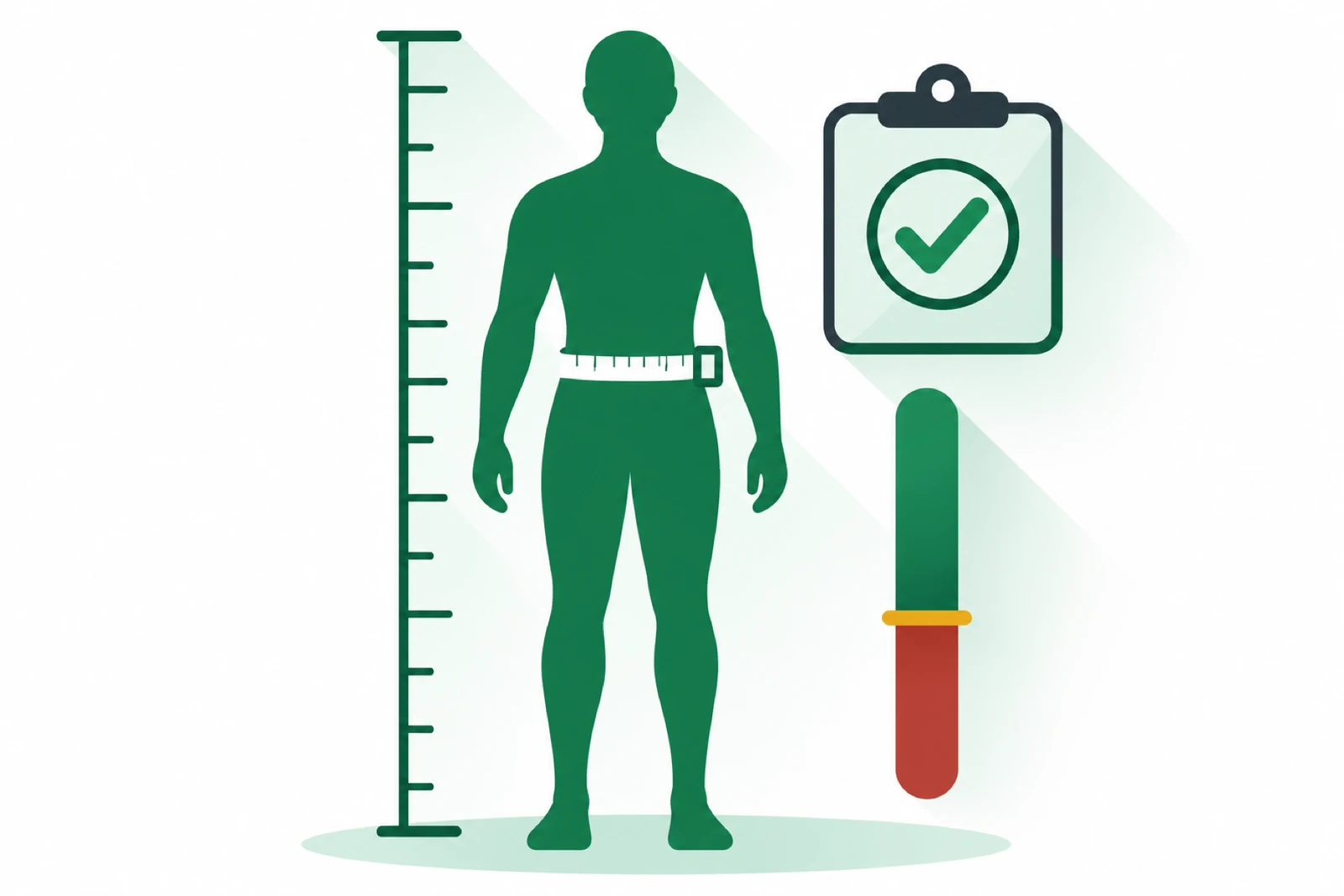
How the Army Calculates WHtR
The waist is measured at the navel, and that number is divided by height in inches.
A Soldier who is 70 inches tall with a 38-inch waist has a ratio of about 0.543 and meets the standard. At a 38.5-inch waist, the ratio is exactly 0.55, which does not.
How to measure your waist
- Stand relaxed and find your navel (belly button).
- Wrap a tape measure around your waist at the navel, keeping it level all the way around.
- Breathe out normally and read the tape — do not suck in your stomach.
- Divide that measurement by your height in inches to get your ratio.
Maximum Waist by Height
To find your limit, multiply your height in inches by 0.55. Your waist has to be under that number.
| Height | Waist must be under |
|---|---|
| 5’2″ (62 in) | 34.10 in |
| 5’4″ (64 in) | 35.20 in |
| 5’6″ (66 in) | 36.30 in |
| 5’8″ (68 in) | 37.40 in |
| 5’10” (70 in) | 38.50 in |
| 6’0″ (72 in) | 39.60 in |
| 6’2″ (74 in) | 40.70 in |
| 6’4″ (76 in) | 41.80 in |
What Happens If You Do Not Meet the Standard
- Confirmation: a different team must take a second measurement on the same duty day before any action is taken.
- ABCP: a Soldier who misses the standard on both measurements is flagged and enrolled in the Army Body Composition Program until they meet it.
- Medical exam: Active Component and AGR Soldiers receive a commander-directed exam to rule out underlying conditions.
- Separation: the Army says no separation actions for WHtR failure will occur until its 180-day assessment is complete and further guidance is issued.
What Changed From the Tape Test
- The height and weight tables are no longer in effect.
- The tape test and all other body fat methods have been rescinded, so a Soldier cannot request one to challenge a WHtR result.
- The body composition exemption for scoring 465 or higher on the Army Fitness Test has been rescinded.
- Units must allow at least seven days between a Soldier’s AFT or CFT and their WHtR screening, unless the commander changes this for operational reasons.
Because the 180-day assessment could lead to adjustments, check official Army guidance before relying on any number here.
Other Ways to Check Your Numbers
The ratio only looks at your waist and height. For the civilian health bands behind the same measure, use the waist to height ratio calculator. The Navy uses a two-step version with a body fat estimate, which you can run on the navy body fat calculator.
What Happens If You Fail the Army WHtR
If a Soldier is over the 0.55 limit on the first measurement, a different team takes a confirmation measurement on the same duty day before any action follows. A Soldier who misses the standard on both is flagged and enrolled in the Army Body Composition Program (ABCP) until they meet it; the flag is non-transferable, so the Soldier cannot move to a new duty station, though they remain deployable. The Army has said no separation actions for a waist-to-height failure will occur until it completes a 180-day review.
Army vs Navy vs Marine Corps Standards
All three services moved to a waist-to-height basis, but the numbers differ. The Army uses a single standard: a ratio below 0.55. The Navy uses 0.5499 as a first screen and then a body-fat estimate with 26%/36% limits, which you can run on the navy body fat calculator. The Marine Corps screens at 0.52, then uses a tape test or bioelectrical impedance. The shared idea — waist versus height — comes from a December 2025 Department of War memorandum that set an upper limit below 0.55 across the force.
How the Old Tape Test Worked
Before 2026 the Army estimated body fat from neck and abdomen circumferences (plus the hip, for women) and checked it against age- and sex-based limits under AR 600-9. That circumference method is the same family of math behind our main body fat calculator, so the calculator still gives a reasonable estimate of body fat — it just no longer reflects how the Army decides who meets the standard.
Tips to Meet the Army Standard
Because the standard is now waist-to-height, the goal is reducing abdominal fat:
- Hold a modest, consistent calorie deficit — visceral fat usually responds first.
- Combine the unit’s cardio with resistance training to keep muscle while fat comes off.
- Keep protein high and sleep adequate.
- Measure your waist at the navel the same way each time, and track the trend rather than day-to-day numbers.
Where Else Waist-to-Height Is Used
The Army’s shift mirrors civilian health guidance: the UK’s NICE uses the same waist-to-height idea, with “keep your waist under half your height” as the simple rule. See the civilian health bands on the waist to height ratio calculator, and compare your overall body fat with the body fat percentage chart.
Frequently Asked Questions
Measure your waist at the navel in inches and divide it by your height in inches. The result must be below 0.55.
No. The Army says all previous body fat assessment methods, including the tape test, have been rescinded, and WHtR is the only authorized method.
No. The Army describes WHtR as a single pass-fail measure, and it does not use adjustment tables for age or sex.
The Army says existing medical exemptions to body composition standards remain in effect.
Since 2026 it is a waist-to-height ratio below 0.55 — there is no longer a body fat percentage limit.
Waist at the navel divided by height in inches. A ratio of 0.55 or higher does not meet the standard.